Activated Alumina in Compressed Air Dryers: When to Replace the Desiccant
Water in compressed air often points to saturated desiccant. Learn how to spot when it’s time to replace activated alumina and how to restock without mistakes. Activated alumina is one of the most widely used desiccants for drying air in compressed air systems. It has high porosity and a large contact area, which lets it […]
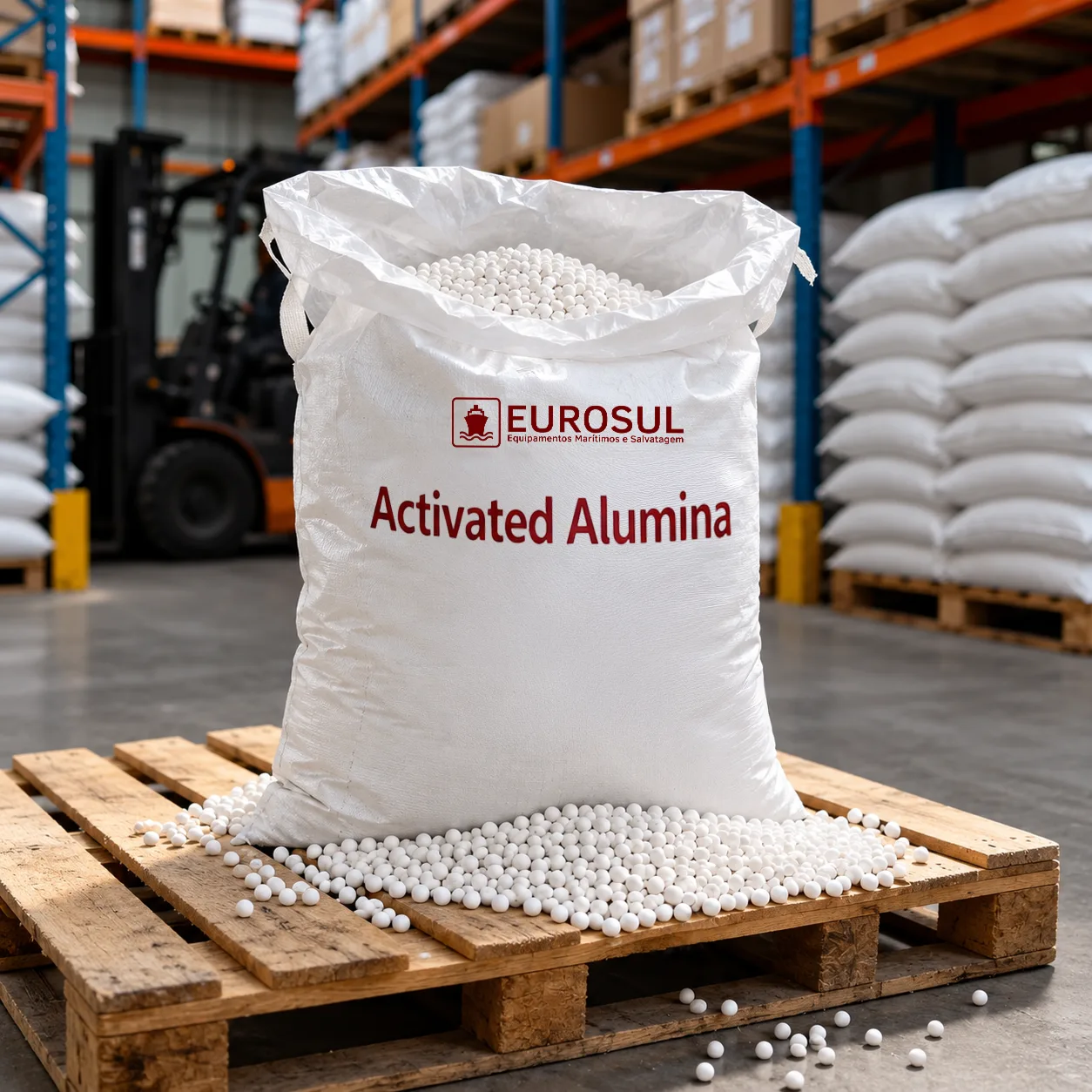
Water in compressed air often points to saturated desiccant. Learn how to spot when it’s time to replace activated alumina and how to restock without mistakes.
Activated alumina is one of the most widely used desiccants for drying air in compressed air systems. It has high porosity and a large contact area, which lets it hold back moisture before the air reaches the lines and equipment. However, as this process goes on, the alumina loses efficiency through saturation. It stops drying once it can no longer retain the water carried in the air stream.
In practice, the problem shows up quietly and gradually. The air keeps flowing, but it carries more moisture than it should, which can cause operational problems and unwanted corrosion in the system. For that reason, it pays to monitor and act preventively instead of waiting for a failure. This Eurosul guide shows how to recognize saturated desiccant, what moisture causes, and how to know when it’s time to replace it.
What Moisture in Compressed Air Causes
When compressed air cools down, the moisture it carries condenses. If the dryer doesn’t hold it back, the water travels through the lines. As a result, pipes corrode and pneumatic valves and tools start to fail. In addition, water in the receivers increases the need for draining and maintenance.
Signs That Activated Alumina Is Saturated
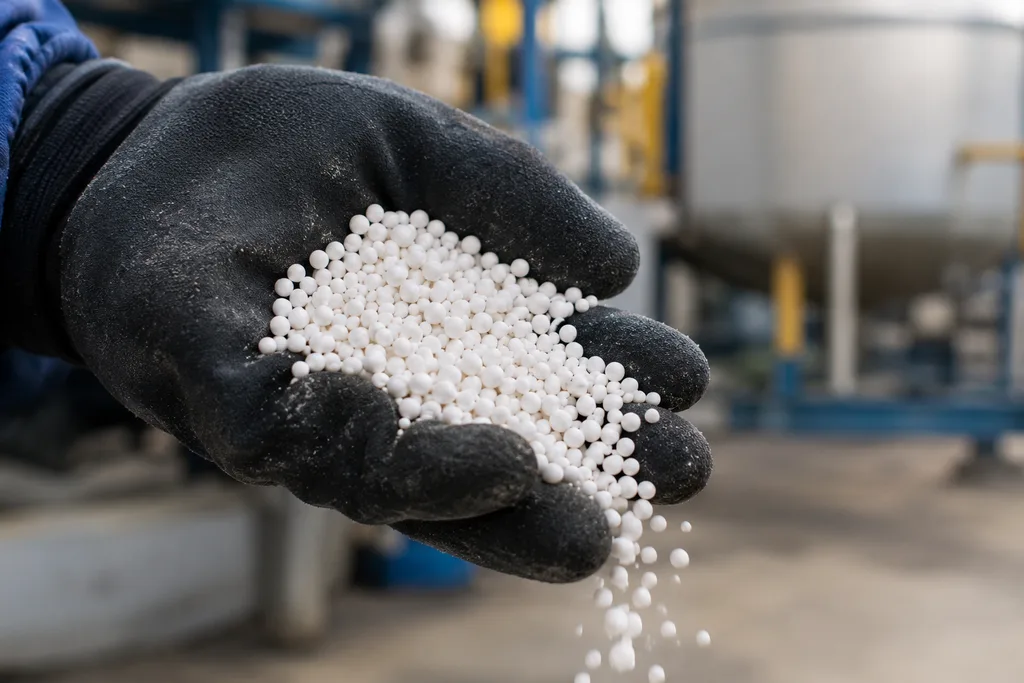
A few signs indicate the desiccant needs replacing:
- Increase in water in drains and filters: more condensate than usual after the dryer.
- Moisture appearing in lines and tools: droplets or damp air at the points of use.
- Higher dew point: on systems with monitoring, the reading rises over time.
- Valve sticking: the presence of water strips the system’s lubrication.
- Corrosion or rust spots along the line.
- Greater need for maintenance and replacement of pneumatic parts.
- Higher pressure drop in the system, which calls for more pressure and higher energy use.
IMPORTANT: If the dryer has a gauge or indicator, use it as the reference. The replacement interval must follow the maintenance plan and the dryer manufacturer’s recommendation.
How to Choose the Replacement: Granulometry and Packaging
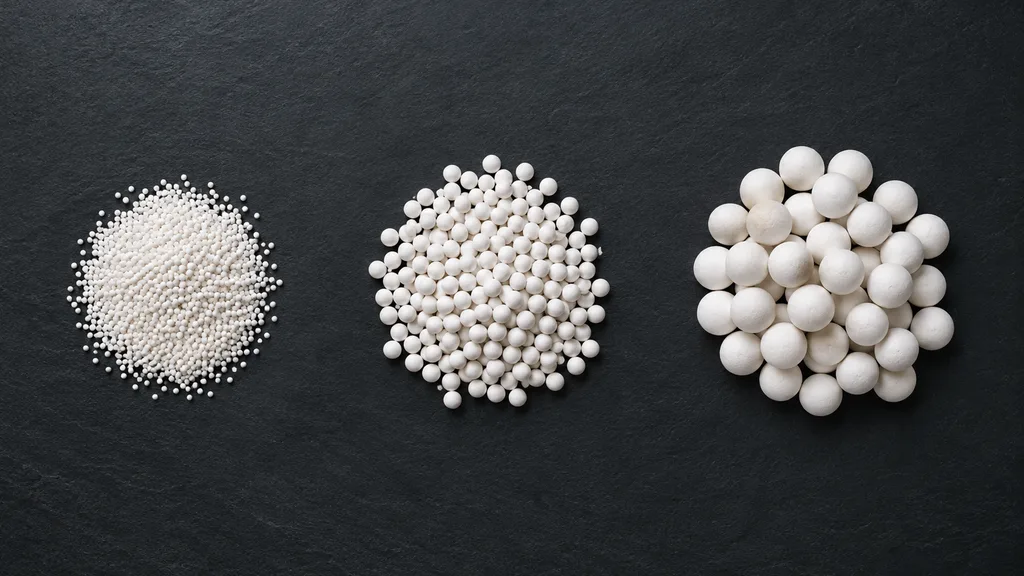
The chosen granulometry must follow the dryer manufacturer’s specification. Eurosul sells activated alumina in three sizes: 1/16″ (1.6 mm), 1/8″ (3.2 mm), and 3/16″ (4.8 mm).
The 1/8″ and 3/16″ sizes come in a 25 kg bag, a 150 kg drum, or by the kilo, depending on consumption. For the 1/16″ size, check the sales format with our team.
Our aluminas carry SGS certification (1/8″ and 3/16″). The technical data sheet, the SDS, and the emergency sheet are available on our website.
Storage and Care During Replacement
Because activated alumina holds moisture, it also absorbs moisture from the surrounding air. For that reason, keep the packaging closed until use and store it in a dry place. During replacement, follow the dryer’s procedure and check the product’s SDS.
Mechanical Strength and Regeneration of Activated Alumina
Activated alumina has high mechanical strength, which allows safe and quick handling. In addition, it can be regenerated over several cycles. To do so, simply place it in an oven above 200 °C for about 4 hours, and the absorbed water is driven off. This process does not affect the product’s performance.
Activated Alumina for Dryers – Eurosul
👉 Check the granulometries, packaging, and documents for activated alumina
When water shows up in the drains, moisture appears in the lines, or system performance drops. If the dryer has an indicator or gauge, use it as the reference and follow the manufacturer’s maintenance plan.
Yes. It can be regenerated over several cycles by placing it in an oven above 200 °C for about 4 hours to drive off the absorbed water.
The one specified by the dryer manufacturer. Eurosul offers 1/16″ (1.6 mm), 1/8″ (3.2 mm), and 3/16″ (4.8 mm).
The 1/8″ and 3/16″ sizes come in a 25 kg bag, a 150 kg drum, or by the kilo. For 1/16″, check the sales format.
Technical data sheet, SDS, emergency sheet, and an SGS conformity certificate for the 1/8″ and 3/16″ sizes, available on the product page.
Mainly in compressed air drying systems, in moisture removal in industrial processes, and in adsorption of impurities from gases and liquids, including the marine and offshore industries. It can also be used in water treatment and as a catalyst or catalyst support.
Share