Maritime Emergency Lighting: Technical Requirements and Selection Criteria
Discover the engineering behind SOLAS-certified lifejacket and lifebuoy lights and why international compliance is vital for offshore safety. In maritime and offshore operations, maritime emergency lighting plays a critical role: ensuring that people in the water can be located quickly, even in low-visibility environments. To fulfill this vital function, it is essential to evaluate technical […]
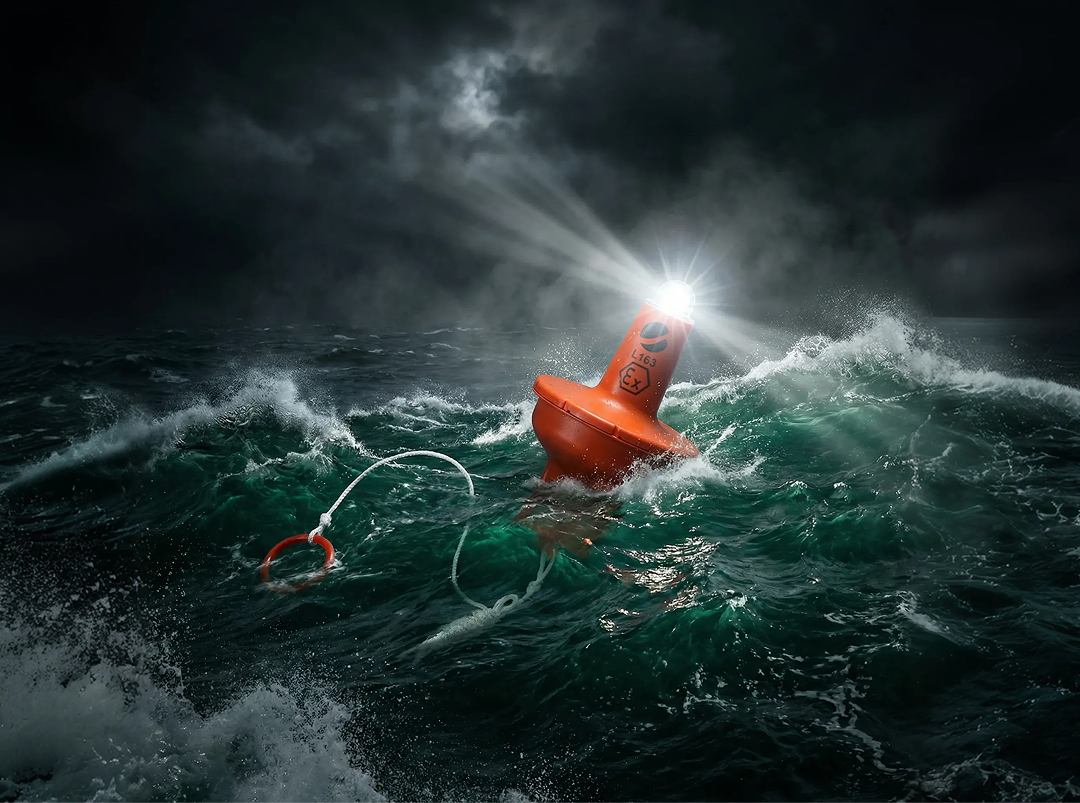
Discover the engineering behind SOLAS-certified lifejacket and lifebuoy lights and why international compliance is vital for offshore safety.
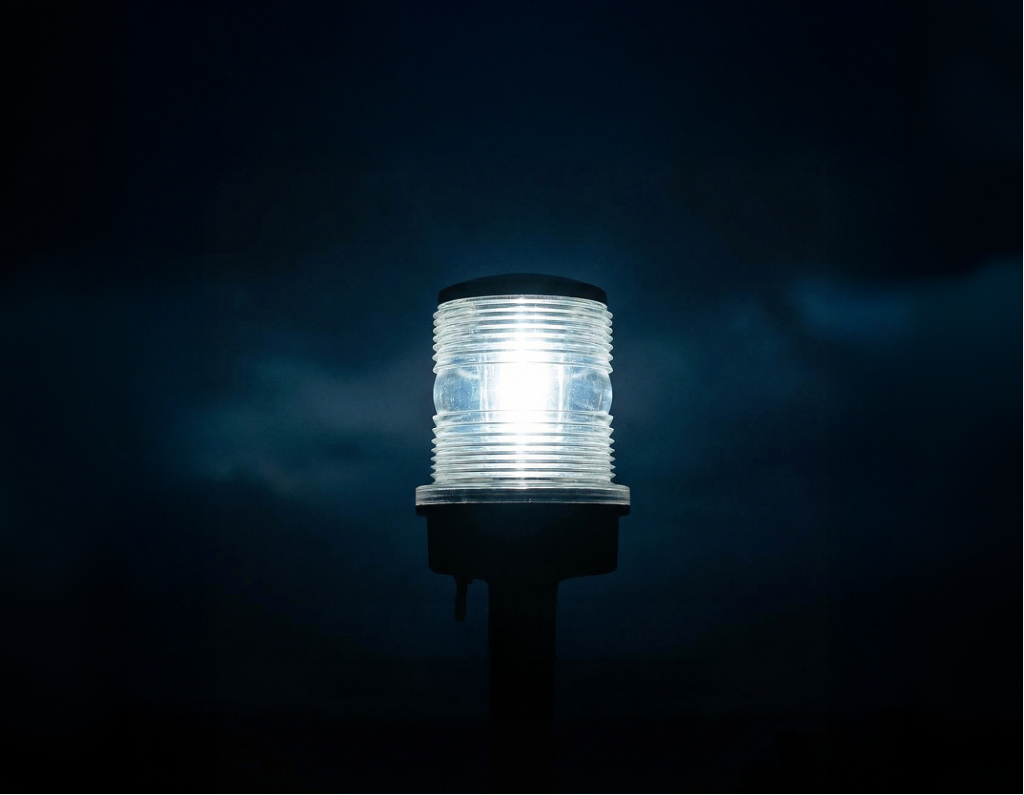
In maritime and offshore operations, maritime emergency lighting plays a critical role: ensuring that people in the water can be located quickly, even in low-visibility environments. To fulfill this vital function, it is essential to evaluate technical requirements, international certifications (such as SOLAS), and suitability for continuous use in highly corrosive saline environments.
Technical Criteria for Selecting Maritime Emergency Lighting
Engineering parameters for maritime emergency lighting:
- Luminous intensity (cd) and emission pattern:
Long-distance visibility. - Operational autonomy:
Adequate for search and rescue (SAR) response time. - Activation type:
Automatic (water-activated), manual, or hybrid. - Floating position:
Maintaining the light beam above the waterline. - Resistance:
Appropriate IP rating and protection against saltwater corrosion. - Mechanical robustness:
Resistance to impacts and severe vibrations. - Certification and traceability:
Full equipment compliance.
SOLAS Compliance and Brazilian Navy Requirements
The SOLAS certification establishes rigorous performance parameters for maritime emergency lighting, including luminous intensity and battery life. It is important to highlight that the Brazilian Navy, in its safety regulations for navigation (NORMAM), accepts and reinforces the adoption of equipment with International SOLAS Certification, ensuring that the vessel is in global compliance.
Battery Technology: Lithium vs. Alkaline
- Lithium Technology: The preferred choice due to its superior power and ability to operate at extreme temperatures. While the SOLAS requirement is 8 hours at 0.75cd, Daniamant’s lithium lights can last up to 90 hours.
- Alkaline Technology: A reliable alternative that meets all SOLAS and Marine Equipment Directive (MED) testing requirements, with a lifespan of up to 60 hours, facilitating transport and disposal.
Daniamant Design and Versatility
Daniamant lights, distributed by Eurosul, offer specific engineering solutions for maritime emergency lighting:
Intrinsic Safety: For hazardous environments with explosion risks, we provide models such as the L6aEx, ensuring total protection in critical operations.
Mounting Versatility: Designed to fit all types of lifejackets using specialized clips, including Recessed, Belt, and Inflator Tube Clips.
Mechanical Robustness: Saltwater-resistant sealing and materials, maintaining performance even under heavy impact and vibration.
👉 [Check our full line of Daniamant Lifejacket and Lifebuoy Lights]
Daniamant Lights: Relevant Technical Features
Daniamant lights, distributed by Eurosul, incorporate specific engineering solutions for maritime emergency lighting in open sea conditions:
- Automatic water activation: In applicable models.
- Extended autonomy: Suitable for prolonged SAR scenarios.
- Optimized light emission: Ensuring long-range visibility.
- Sealing and resistant materials: Providing durability in saline environments.
- Mechanical robustness: Maintaining performance under impact and vibration.
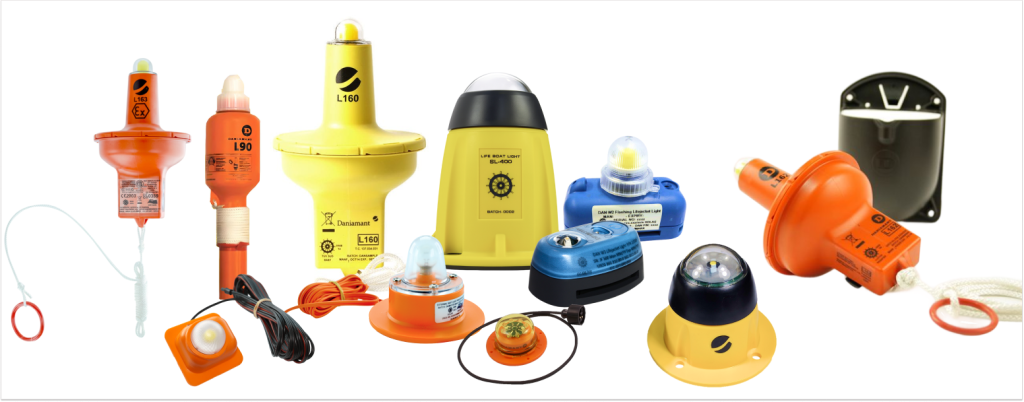
👉 Daniamant Lights for Lifejackets and Lifebuoys — Link
Share