EPIRB and SART: Operational Differences and Importance in GMDSS
In the international maritime environment, emergency communication is decisive for survival in critical situations. Within the Global Maritime Distress and Safety System (GMDSS), two pieces of equipment play complementary and essential roles: the EPIRB and the SART. Both are widely required on SOLAS ships, commercial vessels, and offshore units operating in international waters, ensuring that […]
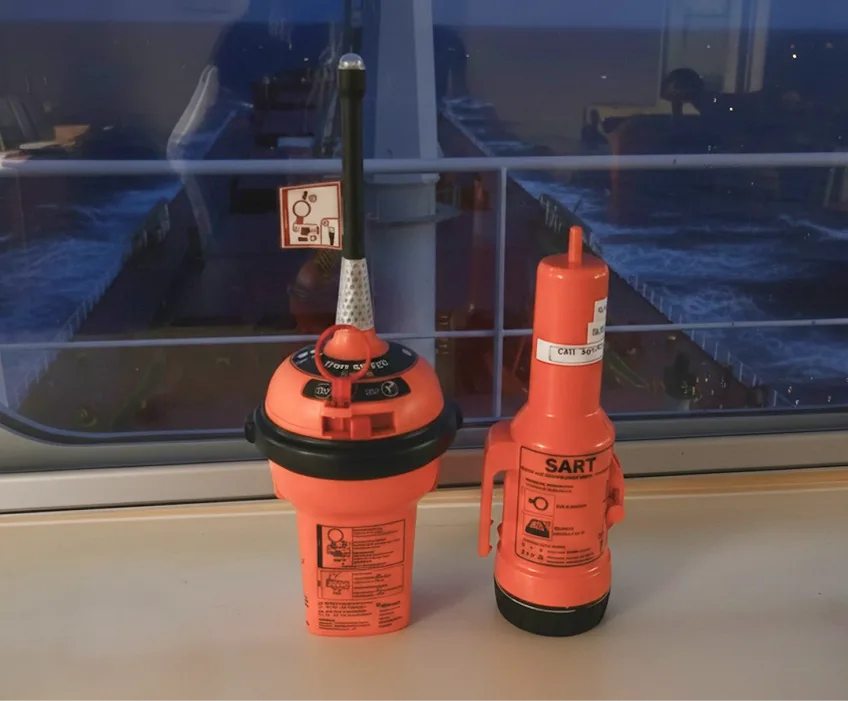
In the international maritime environment, emergency communication is decisive for survival in critical situations. Within the Global Maritime Distress and Safety System (GMDSS), two pieces of equipment play complementary and essential roles: the EPIRB and the SART. Both are widely required on SOLAS ships, commercial vessels, and offshore units operating in international waters, ensuring that the distress alert is transmitted and that rescue teams can locate survivors with precision.
EPIRB: Global Maritime Emergency Alert
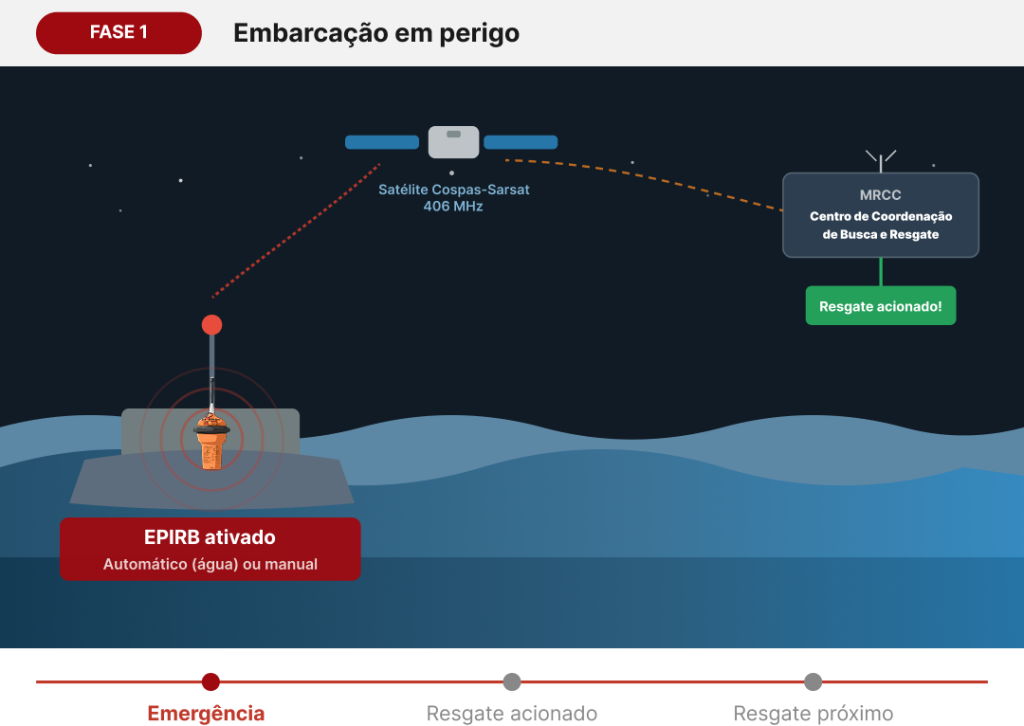
The EPIRB (Emergency Position Indicating Radio Beacon) is responsible for automatically emitting a distress alert via satellite, using the internationally recognized Cospas-Sarsat system.
Main Features:
- Automatic or manual distress signal transmission;
- Transmission on 406 MHz;
- Vessel identification and, in GNSS models, exact position;
- Minimum autonomy according to SOLAS requirements.
Primary function: to alert authorities and rescue coordination centers about a distress situation in the open sea.
SART: Precise Location in the Final Rescue
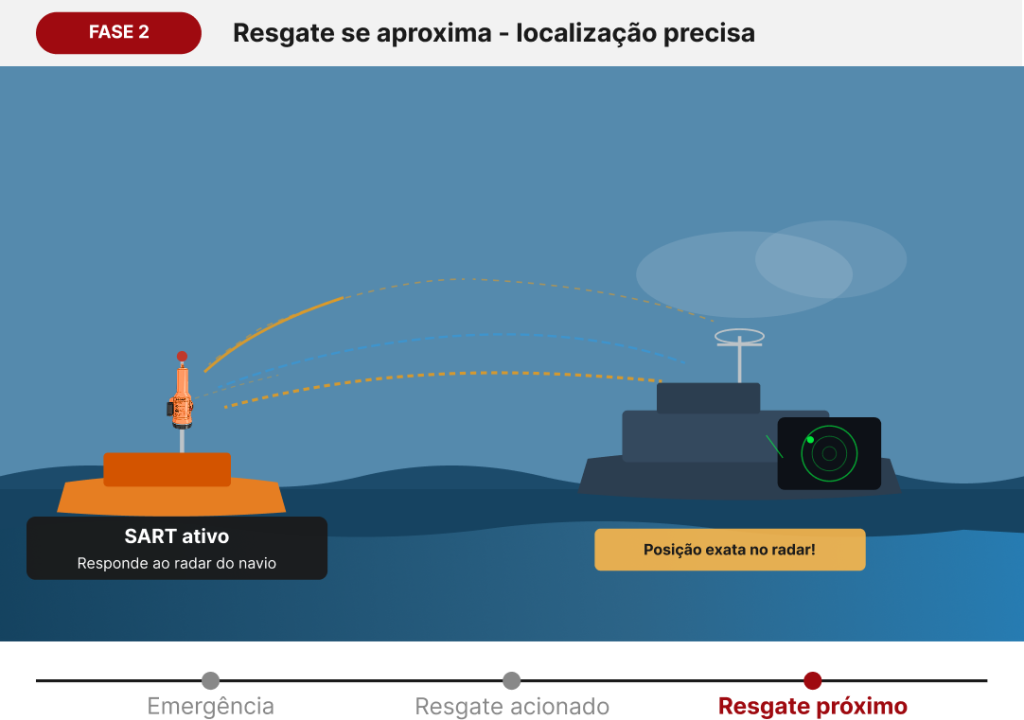
The SART (Search and Rescue Radar Transponder) acts as an electronic guide for search and rescue teams. Unlike the EPIRB, it does not send satellite alerts but responds to radar signals from rescue ships or aircraft.
Main Features:
- Operation in X-Band (9 GHz);
- Creation of visible echoes on the rescuer’s radar;
- Typical use in life rafts or by survivors;
- Autonomy compatible with SOLAS requirements.
Primary function: to allow the rescue team to visually locate, on the radar, the exact position of survivors.
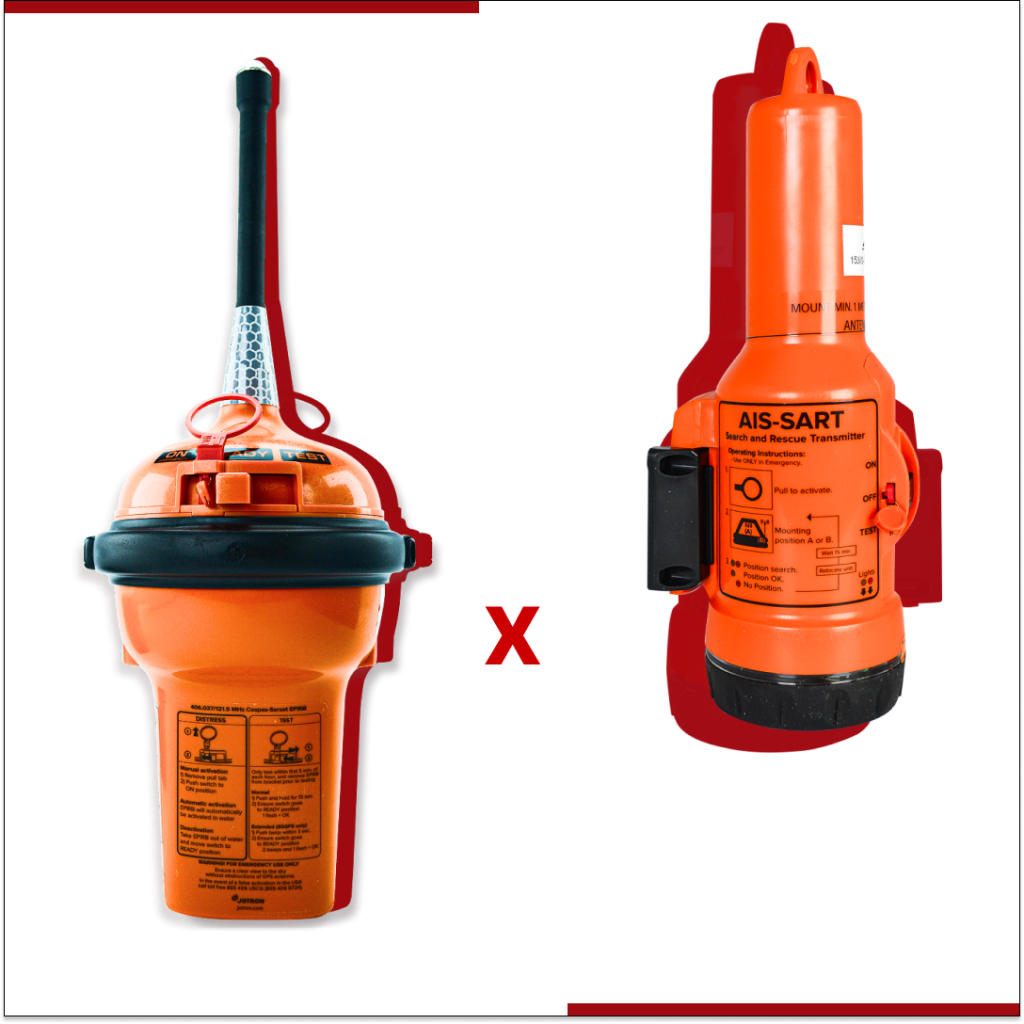
EPIRB and SART: Complementary Equipment in GMDSS
Within GMDSS, EPIRB and SART do not compete — they complement each other:
- The EPIRB triggers the global alert;
- The SART guides the rescue to the exact point.
Therefore, both are required on ships following the SOLAS Convention, regardless of flag or region of operation.
Reliability, Certification, and Maintenance
To ensure performance in a real emergency, EPIRBs and SARTs must:
- Meet SOLAS and IMO requirements;
- Hold internationally accepted certifications;
- Be correctly programmed, tested, and maintained.
Eurosul provides certified EPIRBs and SARTs, along with specialized technical support to ensure that equipment meets the operational requirements of ships in international service.
Share