Breathing in Danger: The Critical Importance of SCBA and EEBD in Maritime Safety
Understand the technical differences and SOLAS requirements for respiratory protection equipment that ensures survival in toxic environments and fires onboard. In emergency situations onboard, air quality is the factor that separates life from death. Whether fighting a fire or escaping a compartment invaded by toxic gases, self-contained breathing apparatuses are indispensable. However, there is a […]
Understand the technical differences and SOLAS requirements for respiratory protection equipment that ensures survival in toxic environments and fires onboard.
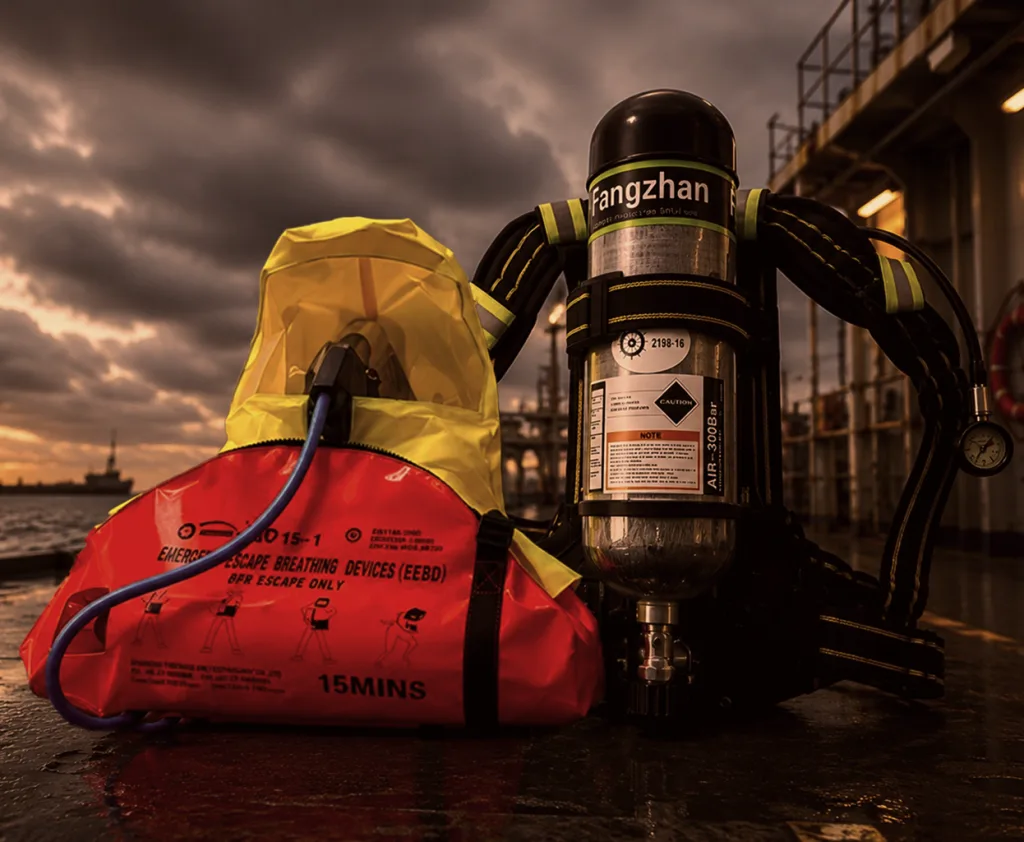
In emergency situations onboard, air quality is the factor that separates life from death. Whether fighting a fire or escaping a compartment invaded by toxic gases, self-contained breathing apparatuses are indispensable. However, there is a common confusion between two essential devices: SCBA and EEBD. In this technical guide, Eurosul clarifies the functions of each, the FSS (Fire Safety Systems) Code requirements, and the maintenance protocols necessary to ensure operational readiness.
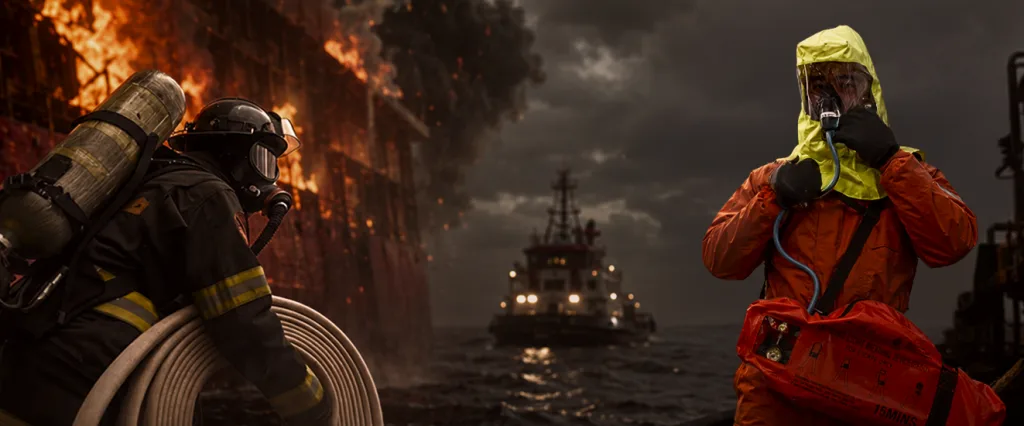
SCBA: The Equipment for Combat and Work
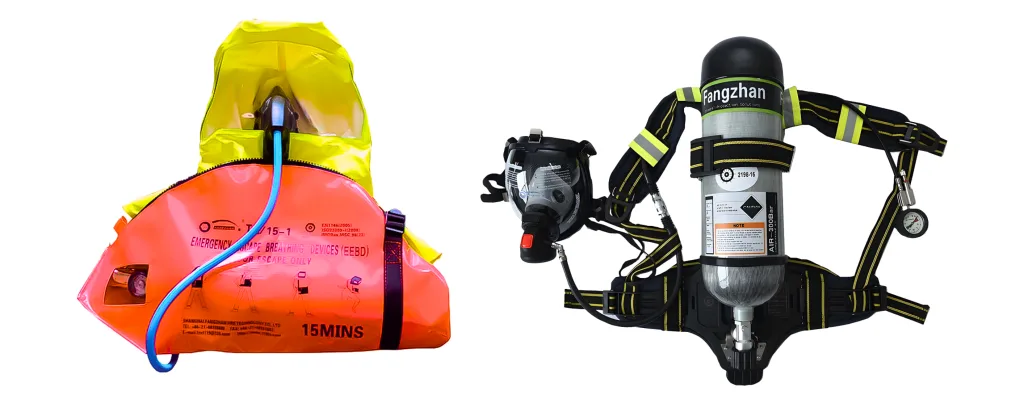
The SCBA (Self-Contained Breathing Apparatus) is an open-circuit breathing apparatus designed to allow firefighting personnel, whether part of the ship’s crew or not, to enter hazardous atmospheres. With a minimum autonomy of 30 minutes, it consists of a compressed air cylinder, positive pressure face mask, and high-performance regulators. It is the standard equipment for firefighting teams (Fireman’s Outfits) and for inspections in confined spaces.
EEBD: The Emergency Escape Breathing Device
Unlike the SCBA, the EEBD (Emergency Escape Breathing Device) has a single purpose: escape. It must not be used for firefighting or entering tanks. Its function is to provide a continuous flow of air for at least 10 minutes, allowing the crew to escape from smoke or gas-filled areas. Its lightness and ease of activation are vital for rapid evacuation in corridors and engine rooms.
Maintenance and SOLAS Compliance
SOLAS regulations require both pieces of equipment to undergo rigorous annual inspections. Furthermore, cylinders must undergo hydrostatic testing every 5 years to verify structural integrity under pressure. Equipment without maintenance is not just a non-compliance in audits; it is a fatal risk for the crew.
High-Performance Respiratory Protection
👉 Check our line of SOLAS/MED Certified SCBA and EEBD
Share